



You must have seen colorful plastic cups with beautiful designs. Have you ever wondered how those designs are printed so perfectly? The answer lies in the plastic cup printing machine. Interestingly, this machine is not just one kind; it comes in three types. They are manual, semi-automatic, and fully automatic printing machines for plastic cups. Which one is better?
Each of these machines works differently and offers unique features. Also, their suitability varies with business size and needs. That’s why knowing their key difference is crucial to choosing the right machine for your business. Feeling confused about which machine to go for? Worry not! This guide will make everything easy for you by comparing all three types. Let’s get started!
Overview of Manual, Semi-Auto, and Fully Automatic Cup Printing Machines
Before proceeding to the types, let’s first understand what a cup printing machine is!
A cup printing machine is a special device that prints colorful designs directly onto the cup surface. This machine prints designs, such as logos and images, using specialized techniques. Those include UV printing, screen printing, or pad printing. This eliminates the need for stickers and makes the cup look more attractive.
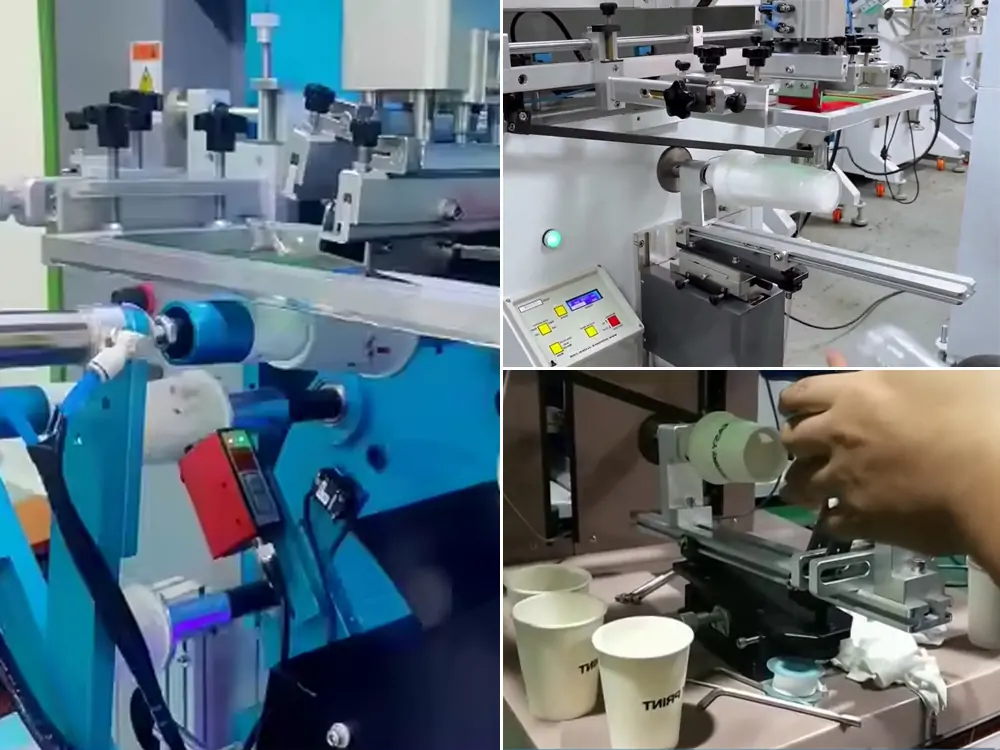
As I mentioned, plastic cup printing machines come in three types. The first one is a manual printing machine. This is a straightforward type that works with human interaction. A person handles all steps of the printing process. For example, an operator places the cup, aligns the print, applies the ink, and removes it. No part of these machines works automatically.
The second type is a semi-automatic printing machine. It is a mix of manual and fully automatic technology. So, some tasks are done by machines, while others still require human input. For example, machines automatically print the design and handle the ink. But human intervention is needed to load and unload the cups.
The third one is a fully automatic printing machine. As the name suggests, this high-end machine does all the tasks. There is no human interaction, which makes it more accurate and efficient. For example, a stack of empty cups is loaded into the machine. After that, it picks the cup, aligns it, prints and dries it, and removes it.
Manual vs Semi-Auto vs Fully Automatic Printing Machine for Plastic Cups: Key Differences
The overview can give you a basic understanding of all three types of cup printing machines. Remember, each machine has its pros and cons. So, to understand them completely, let’s compare them head-to-head to decide which suits your project!
1- Level of Automation & Speed of Operation
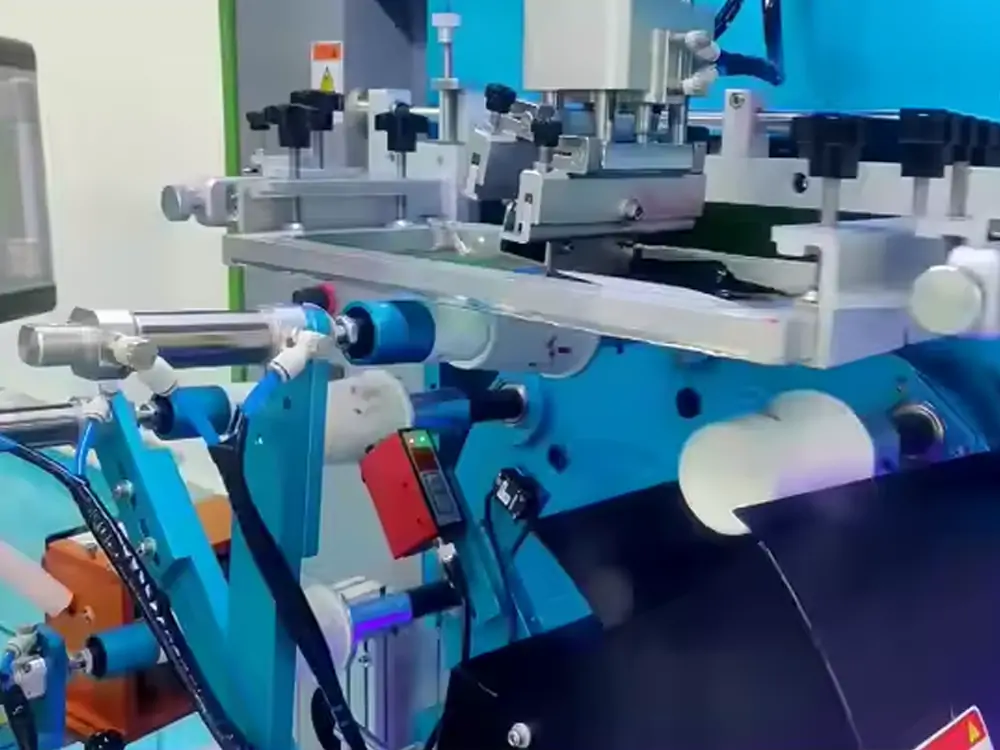
The level of automation refers to how a machine operates without human intervention. Manual presses top out at 300–800 cups per hour. Everything is done by hand. You have to place the cup, start printing, and remove the cup after printing. All this reduces the overall printing speed.
By contrast, semi-automatic cup-printing machines have a moderate level of automation. This machine can handle some tasks on its own. For example, it prints the design and dries the ink automatically. But you must still be involved in this process for some functions. As a result, printing processes become faster to some extent, but still take time.
Lastly, it comes to fully automated printing machines. These machines have the highest level of automation. From loading to printing and removing cups, all tasks are done by the machine. So, such machines can print many cups in less time. As a result, the printing operation becomes much faster and more efficient.
2- Labor Requirement & Maintenance Needs
Maintaining cup printing machines is a fundamental and vital difference to understand. For example, manual cup printing machines are straightforward and involve simple parts. They do not include complex electronics or sensors, making maintenance effortless. However, regarding labor requirements, manual machines are demanding.
Each step of printing must be done by hand. So, these machines require a large amount of labor. Conversely, semi-automatic machines reduce physical workload by automating some steps. For example, these machines apply the ink and rotate the cups. As a result, labor needs are moderate. Regarding maintenance, semi-auto machines are slightly complex.
They involve motors, switches, and control panels that require proper maintenance. In contrast, fully automatic printing machines run with minimal human involvement. Almost all the tasks, feeding, printing, and removing the cups, are automatic. Operators are usually needed only for monitoring and quality control.
That’s why these machines require little to no labor. Automated machines are maintenance-intensive. They involve advanced machinery features and electronic systems. Those parts require regular servicing, like lubrication, calibration, and software updates. All this needs professional maintenance to ensure quality.
3- Print Quality & Consistency
Print quality refers to how sharp and vibrant the printed design appears on the cup. Consistency indicates whether results stay the same across thousands of prints. Let’s first begin with manual cup printing machines. As I said above, these machines work with human involvement. So, the print quality depends heavily on the operator’s skill.
That’s why printing errors like smudges and uneven color are most likely to appear. Moreover, consistency is also harder to maintain, especially in long production runs. On the other hand, semi-automatic machines perform better in this area. Automated components control some parts of the printing process. So there is better alignment and ink control.
This leads to more uniform printing compared to manual machines. As you can see, this machine still involves some manual steps. Therefore, slight design variations can still occur due to misalignment. Now, fully automatic printing machines are highly efficient in this regard. These machines have the highest level of automation.
There is no chance of human error, which enhances the quality. This machine ensures every cup is printed with the same speed, pressure, and alignment. So, even a thousandth cup looks exactly like the first cup in terms of quality and print. With automatic machines, you can get high-quality and professional-level prints on a large scale.
4- Production Volume Capability
Production volume shows how many cups a machine can print at a particular time. All three of these machines behave differently in this regard. Let me first clarify the manual cup printing machine. As you know, these machines rely on human efforts, so the overall process is slow. This makes them ideal for small custom orders.
By comparison, semi-automatic machines are fast. Some parts are automated and don’t need human involvement. Operators only need to manage a few tasks, like loading and unloading. This improves the production capacity to some extent. Hence, these machines are designed to produce medium-volume printed cups.
In contrast, fully automatic printing machines are entirely automated. These machines work continuously and handle all tasks without human intervention. As a result, they can print a large number of cups in no time. Such high speed makes them ideal for high-volume production. They are perfect for companies with heavy daily orders
5- Ease of Use & Training
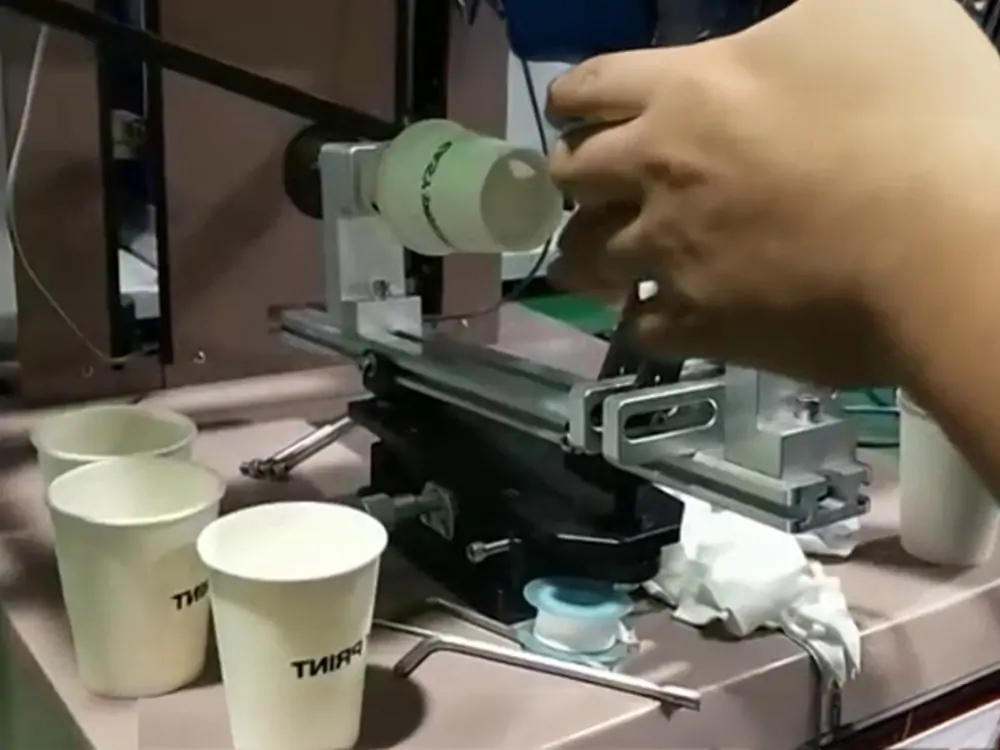
Another difference between these three cup printing machines is how easy they are to use. Let’s first discuss the manual cup printing machine. This machine is generally the simplest to understand and operate. It has fewer buttons, no digital control, and straightforward mechanical steps. So, anyone with basic instructions can learn how to use it.
If you want high-quality results, you should practice more. For example, correctly aligning the cup and applying the appropriate amount of pressure requires experience. On the other hand, semi-automatic printing machines are slightly more complex. They include automated functions such as motor-driven movements.
So, you have to learn how to operate the control panel and adjust settings to avoid errors. While it’s not very difficult to operate, little training and hands-on practice are crucial. Once an operator masters the basics, the machine becomes much easier to run day-to-day. Now, if we discuss fully automatic printing machines, they are very complex.
These machines involve digital control, sensors, and programmable settings. So, these systems require more technical knowledge to understand them. You need practice and training to operate functions such as multi-color printing and touchscreen controls. However, as you become trained, the machines become more efficient and easier to work with.
6- Space & Setup Requirements
Space and setup requirements also differ for each type of cup printing machine. For example, manual machines are the most compact of all. They usually have small frames and don’t require additional equipment. Moreover, their setup is also simple, involving just a power source. It means you can easily adjust them in small places.
On the flip side, semi-auto machines are larger and include more components. For example, these machines involve control panels, automated parts, and motors. Moreover, some of their functions also require manual involvement. So they also need a dedicated room for operators to work and move freely. However, these machine setups are still manageable in medium-sized factories.
Fully automatic printing machines are the largest and most complex. These machines include feeders, dryers, conveyors, and control systems. Because of their size and automation, they require plenty of floor space. Moreover, their setup involves professional installation and system calibrations. So these machines are ideal for large manufacturing facilities.
7- Suitability for Business Types
Each type of printing machine is ideally suited for different kinds of businesses. For instance, manual printing machines are ideal for small businesses and startups. A manual machine is perfect if you are just starting, producing cups in small batches. It does not require a big space or a large staff. Moreover, it is also great for operations that require flexibility.
On the other hand, semi-auto machines are perfect for growing businesses. They suit businesses that need to increase output without jumping into industrial setups. These machines strike a perfect balance between manual and automated control. This makes them ideal for medium-sized companies with moderate to high demands.
In contrast, fully automatic machines are suitable for large-scale cup printing businesses. These machines are high-speed and efficient. As a result, they can print thousands of cups in less time. This helps you meet tight deadlines and large numbers of orders. So overall, automatic printing machines suit large-volume manufacturing companies.
8- Cost and Affordability
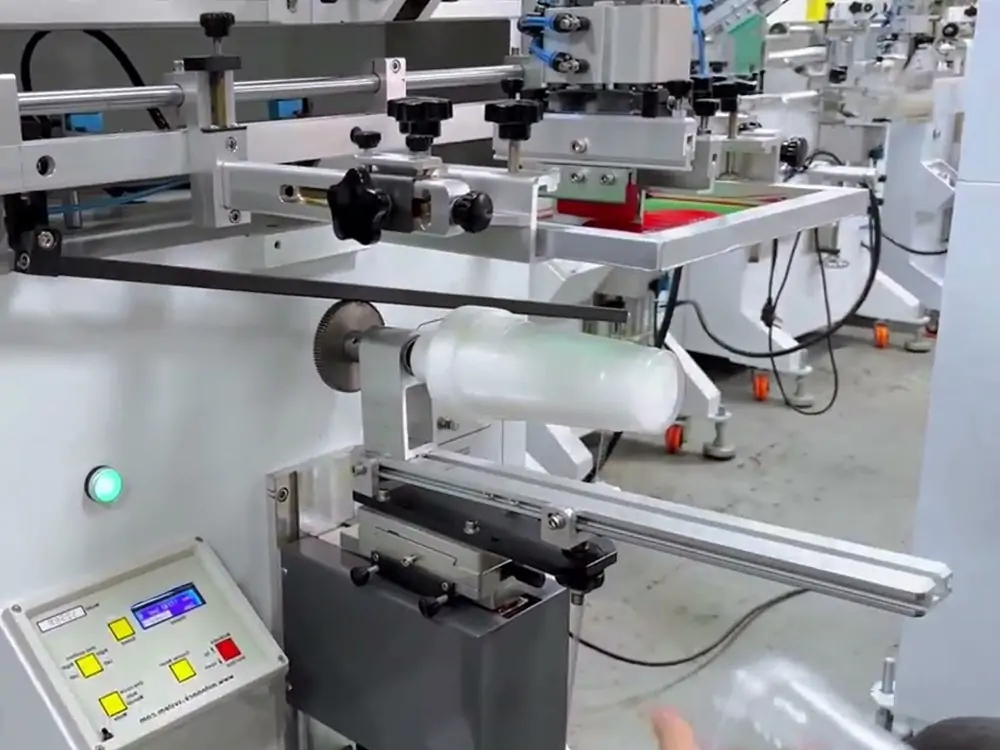
Cost is one of the significant factors that differentiate cup printing machines. Each type of machine has a different price range. For example, manual printing machines are a cost-effective option with low running expenses. WHY? First, they involve simple parts that come at lower prices. Moreover, these machines don’t require skilled staff.
This reduces labor costs. They don’t wear out quickly and last long, reducing their cost. Manual machines are also the easiest to maintain. On the flip side, semi-automatic machines are moderately priced. They are more expensive than manual machines due to partially automated features. This also increases maintenance and labor costs.
Finally, fully automatic printing machines are the most expensive. The first reason is their advanced technology and automatic systems. To operate those systems, you must hire skilled staff and provide proper training. Also, these machines require regular maintenance, which increases the total cost of ownership. However, in the long run, these machines are very cost-effective due to their high production speed.
Which Printing Machine Should You Choose: Manual, Semi-Auto, or Fully Automatic?
There is no one-word answer to this question. It highly depends on the needs of your project. So,
Manual printing is the best choice if you’re new to the cup printing business. Semi-auto machines are ideal if your business is growing and you need cost-effective yet fast production. But if your business requires mass production with high speed and accuracy, I recommend fully automated machines.
But remember, there is no one-size-fits-all machine. Each has its pros and cons. So, for their final selection, you should understand the nature of your business. For example, manual cup printers are simple and easy to operate. You can run them without hiring skilled workers. However, these machines require more physical effort, making them unsuitable for big orders.
However, semi-automatic printing machines are ahead of manual ones. They offer better speed and require less manual effort. Plus, such machines are also inexpensive and relatively easy to maintain. So, these machines are great for medium-sized businesses that need more cups than before. However, in some steps, these semi-automatic machines still need human involvement.
Fully automated machines are designed for large-scale production. All parts work automatically and do not need human interaction, so they are highly speedy and accurate. These machines can create thousands of cups in no time. However, these machines are expensive initially but can be cost-friendly in the long run.
Frequently Asked Questions
Which machine is best for beginners?
A manual cup printing machine is best for beginners. It does not involve complex machinery parts. So you can efficiently operate them with basic instructions.
Are spare parts of these machines readily available?
Yes, spare parts for these machines are available. This is a significant benefit. If a part is worn out, you can buy it from well-trusted printing machine manufacturers.
What type of ink is used in cup printing?
The type of ink in cup printing depends on the printing method. Some of the standard printing ink involves
- UV ink
- Food grade ink
- Solvent-based ink
Conclusion
Custom-made cups have become popular for branding and marketing in this competitive world. However, behind every well-designed plastic cup lies the right machine. These machines come in three main types. Understanding the basics and differences is crucial if you are a newbie to the cup printing business.
For example, manual printing machines are simple and easy to operate. They are best for small businesses. However, semi-automatic machines are slight versions. Some parts of these machines are automated, while others require human interaction. Lastly, fully automatic machines are highly advanced and efficient. They are high-speed, accurate, and best for large-scale production.
